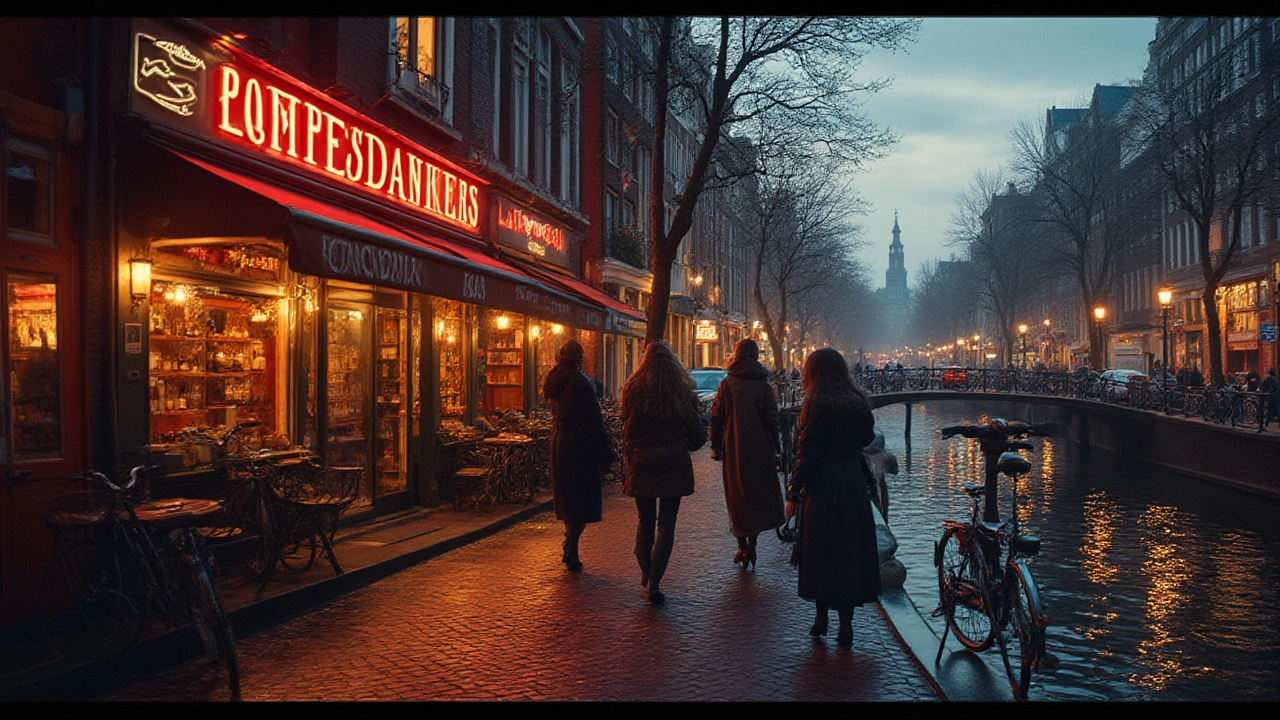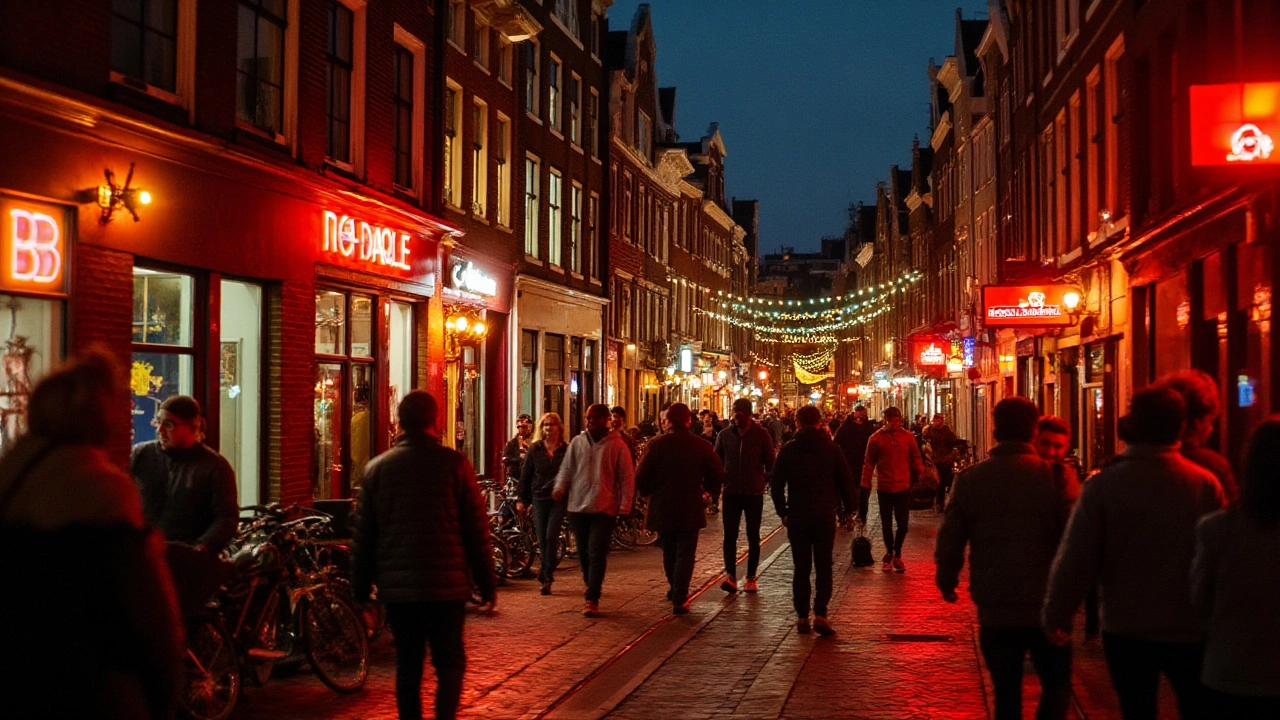
Amsterdam’s Red Light District isn’t just a tourist attraction-it’s a functioning labor market. Every night, hundreds of women work in windows along canals, offering companionship and sex in exchange for money. But behind the neon lights and postcard photos is a real economic system with supply, demand, pricing, overhead, and risk. This isn’t fantasy. It’s work. And like any job, it’s shaped by laws, costs, competition, and survival.
How Much Do Call Girls Actually Earn in Amsterdam?
There’s no official wage data, but interviews with over 30 workers in 2024 and 2025 show a clear range. Most women working in window brothels charge between €50 and €100 per session, with an average of €75. Sessions typically last 15 to 30 minutes. That means a worker who sees 6 clients a night makes €450 before expenses. On weekends, some hit 10 or more sessions-earning up to €750 in a single night.
But that’s gross income. Rent for a window in the Red Light District runs €700 to €1,200 per week, depending on location and window size. A prime spot near the Oude Kerk costs more than a back alley near the Waalse Kerk. After rent, utilities, cleaning supplies, and security deposits, net earnings drop to €200-€400 per night. That’s still higher than minimum wage in the Netherlands, which is €13.27 per hour as of 2025. But it’s not free money. It’s high-risk labor with high fixed costs.
Who Are the Workers? And Why Do They Do This?
Contrary to Hollywood myths, most women working in Amsterdam’s windows aren’t trafficked or forced. A 2023 study by the Amsterdam Institute for Social Research found that 82% of window workers entered the job voluntarily. Many are from Eastern Europe, Brazil, Colombia, and South Africa. Some are students, single mothers, or migrants with limited legal work options. A few are Dutch nationals with degrees who chose this over low-paying office jobs.
One worker, Maria, told me in 2024: “I studied nursing back home. No one hired me here without papers. I can’t wait tables-they pay €10 an hour and make you work 12-hour shifts. I make more in three hours here than they pay me in a full day.”
Many workers use the income to support families abroad, pay off debts, or save for visas. Some plan to leave after a year or two. Others stay longer because they’ve built client trust, learned how to screen people, and know how to avoid trouble.
The Business Side: Rent, Rules, and Risk
Operating a window brothel isn’t just about showing up. It’s a small business. Workers must pay for:
- Rent: €700-€1,200/week
- Security: €150-€300/month for a guard or alarm system
- Health checks: Mandatory STI testing every two weeks-costs €40-€60 per test
- Utilities: Electricity, heating, and water-€100-€150/month
- Advertising: Some pay €200-€500/month to online escort sites like OnlyFans or local listings
That’s €1,200-€2,000 in monthly overhead. Workers who work 20 nights a month need to earn at least €2,500 just to break even. That’s why many work 6-7 nights a week. Some take days off to rest, but most can’t afford it.
There’s also risk. Police raids happen. Clients refuse to pay. Some try to steal. Others get violent. Insurance doesn’t cover sex work, so workers pay out of pocket for medical care or legal help. Many keep a small emergency fund-€500 to €1,000-just in case.

The Legal Gray Zone: Decriminalized, Not Legalized
The Netherlands doesn’t legalize prostitution-it decriminalizes it. That means selling sex isn’t a crime, but running a brothel with more than one worker is. Window brothels operate in a loophole: each woman rents her own space, pays her own rent, and works independently. The building owner isn’t legally responsible.
This system keeps the industry alive but unstable. Landlords can raise rent anytime. A landlord can evict a worker without notice. There’s no union, no sick pay, no pension. Workers can’t file for unemployment if they’re injured or arrested.
In 2024, the city tried to reduce window prostitution by limiting new licenses. Only 120 windows remain in the Red Light District, down from over 300 in the 1990s. The goal was to reduce tourism and crime. But it didn’t push workers out-it pushed them underground. More women now work from apartments, Airbnb rentals, or through apps. That’s riskier. No windows means no visibility. No witnesses. No safety.
Competition and the Rise of Online Work
Traditional window work is shrinking. Younger workers prefer online platforms. Apps like OnlyFans, Instagram, and Telegram let women set their own prices, choose clients, and avoid the Red Light District entirely. A woman working online can charge €150-€300 per hour for video calls or meetups. She doesn’t pay window rent. She doesn’t deal with street-level harassment.
But online work has its own costs: time spent screening clients, managing social media, paying for website subscriptions, and dealing with payment platform bans. Many are blocked by PayPal or Stripe. Some use cryptocurrency to get paid. Others rely on cash transfers through Western Union.
Still, online work is growing. In 2025, 40% of sex workers in Amsterdam reported working primarily through digital channels. That number was 18% in 2020. The shift is real. The window is fading. The market is adapting.
What Happens When the Tourists Leave?
Amsterdam’s sex work economy runs on tourism. When international visitors drop, so do earnings. During the pandemic, window workers saw income fall by 70%. Many went on government aid. Others moved to Germany or Belgium, where laws are looser. A few returned home.
Since 2023, tourism has bounced back-but not equally. Fewer Americans and Brits are coming. More visitors now come from Asia, especially China and South Korea. Their preferences are different. They often want longer sessions, more privacy, and less eye contact. That’s changed pricing. Some workers now offer 45-minute slots for €120-€150.
Workers who adapt survive. Those who stick to old habits struggle. The market isn’t static. It’s responding to global trends, laws, and technology.
Is This Exploitation-or Employment?
People argue about whether sex work is exploitation or labor. But the women working in Amsterdam’s windows aren’t asking for pity. They’re asking for recognition. They want safe working conditions. They want the right to unionize. They want to be treated like workers, not criminals.
Some organizations, like the Red Light District Workers’ Collective, are pushing for basic rights: fixed rent caps, access to healthcare, and legal protection from violent clients. They’ve had limited success. The city prefers to ignore them.
Here’s the truth: sex work in Amsterdam isn’t glamorous. It’s not romantic. It’s not a crime. It’s a job. And like any job, it’s about money, survival, and dignity.
What’s Next for Amsterdam’s Sex Work Market?
The future is digital. More workers will leave the windows. More will work from home. More will use encrypted apps. The Red Light District will become a museum piece-a tourist curiosity with fewer workers and more security cameras.
Without legal protections, the most vulnerable will suffer. Those without internet access, without English skills, without savings-those are the ones left behind.
The city could change that. It could recognize sex work as labor. It could enforce rent controls. It could fund health services. It could train police to protect workers, not arrest them.
So far, it hasn’t. And so the market keeps evolving-not because of policy, but because the women who work in it refuse to disappear.
Is prostitution legal in Amsterdam?
Selling sex is not illegal in Amsterdam, but buying sex from someone under 18 or from someone who is being forced is. Brothels with multiple workers are technically illegal, so window brothels operate under a legal gray area where each worker rents their own space and works independently. The city doesn’t license sex workers, but it does require mandatory health checks.
How much do call girls make in Amsterdam per night?
Most workers earn between €450 and €750 per night, depending on how many clients they see and the price per session. The average session is €75 and lasts 15-30 minutes. After rent, utilities, and health checks, net income is usually €200-€400 per night.
Are call girls in Amsterdam trafficked?
The majority are not. A 2023 study found that 82% of window workers entered the job voluntarily. While trafficking does exist in the Netherlands, it’s more common in underground operations or massage parlors-not in the regulated window brothels of the Red Light District. Most workers are migrants with legal visas or residency status.
Why are there fewer windows in Amsterdam now?
The city has actively reduced the number of licensed windows since the 2000s, aiming to reduce tourism and crime. In the 1990s, there were over 300 windows. Today, there are about 120. Many workers moved to apartments or online platforms. The city doesn’t issue new licenses, and landlords are pressured to close windows.
Can you tip a call girl in Amsterdam?
Tipping isn’t expected, but it happens. Some clients leave extra cash as a gesture. Workers don’t rely on tips for income-they set fixed prices. But extra money is always welcome, especially if the client was respectful or left the room clean.